

Does This Sound Familiar?
For many people, back pain isn’t a one-time injury. It’s a repeating cycle.
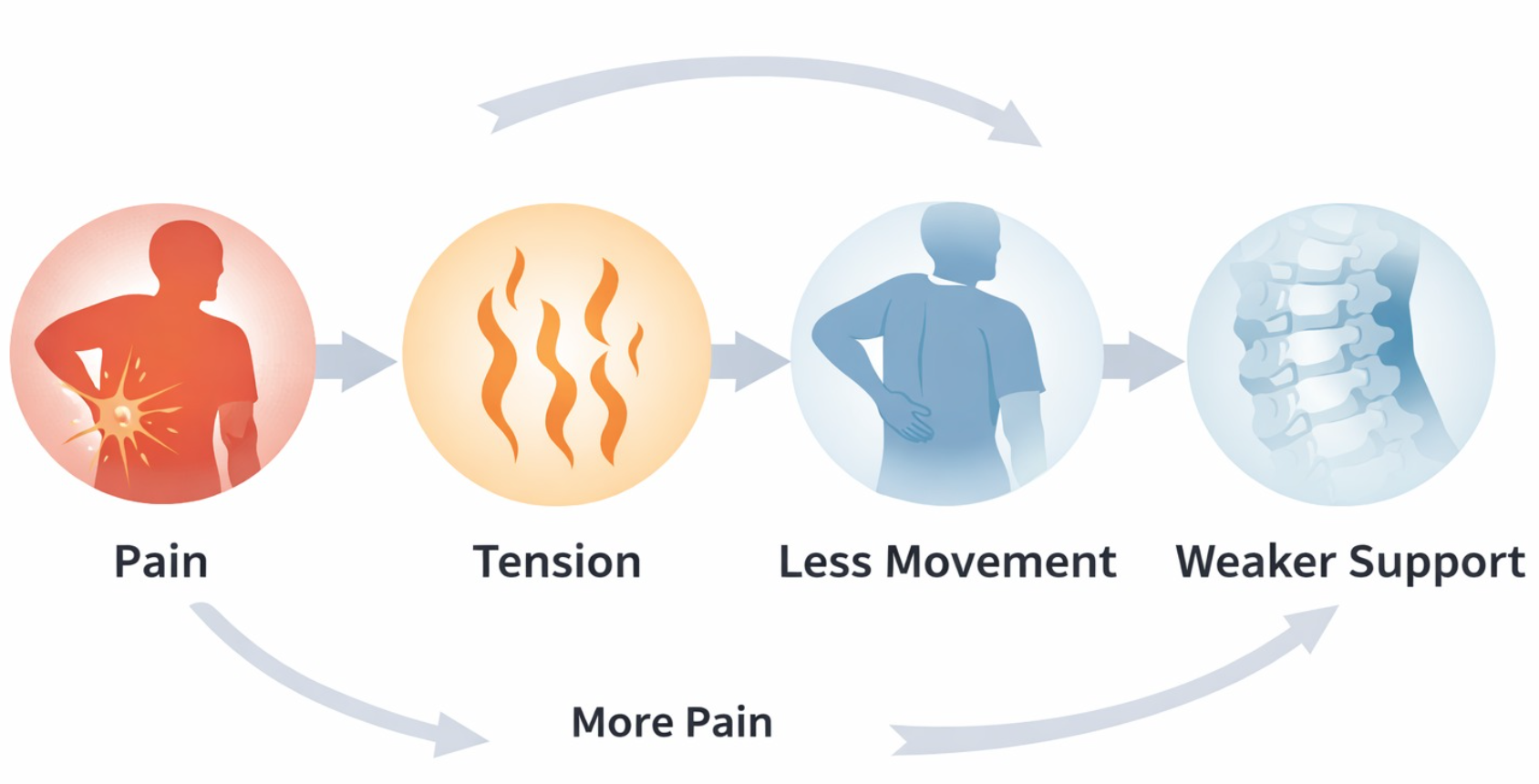
Pain → tension → less movement → weaker support → more pain.
And that’s where most solutions fall short.
The Hidden Pattern Behind Recurring Back Pain
Temporary fixes can help in the moment.
Stretching may feel good.
Massage can provide relief.
Over-the-counter options may dull discomfort.
But for many people, the pain returns.
Why?
Because in a large number of recurring cases, the issue isn’t just inflammation or posture.
It may be weak or underactive support muscles around the lower spine.
When these stabilizing muscles stop activating properly, the body compensates. Other muscles tighten. Movement changes. Pressure shifts.
Over time, that compensation can lead to stiffness, tension, and sometimes nerve irritation.
Which is why the pain keeps coming back — especially in the morning.
Why Morning Back Pain Is So Common
During sleep, your body is still for hours.
If the small support muscles around the spine are already weak or inactive, they don’t “switch on” effectively when you wake up.
That can lead to:
- Morning stiffness
- Sharp discomfort when standing
- Tightness after sitting
- Reduced mobility early in the day
Many people assume it’s “just aging.”
But in some cases, it may be a muscle activation issue.
A Different Approach: Reactivating Support Muscles
Instead of masking discomfort, some clinicians now focus on gently reactivating the muscles that stabilize the lower back.
The goal isn’t to overpower the body. It’s to encourage proper engagement of muscles that may have stopped doing their job.
This approach is often described as:
- Targeted
- Low-impact
- Short-duration
- Designed for consistency
For many people, sessions take around 25 minutes.
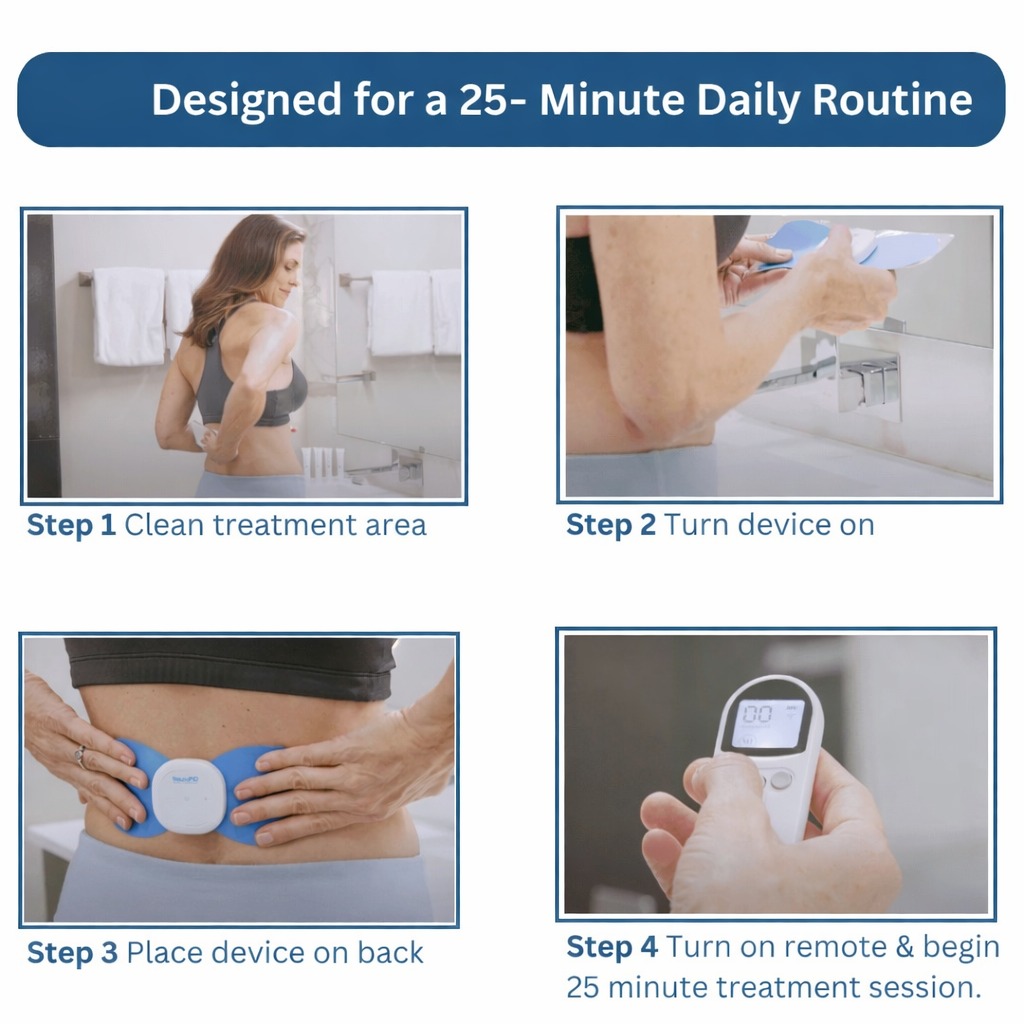
Consistency appears to matter more than intensity.
What To Expect
This is not an overnight solution.
Some users report a gradual response timeline:
Illustrative trend based on user self-reports. Individual results vary.
Results vary. Consistency matters. And realistic expectations help.
How This Method Differs From Traditional TENS Units
Many people are familiar with TENS devices, which focus on nerve stimulation to temporarily reduce pain signals.
Why Temporary Relief Isn’t Always Enough
Temporary relief can be genuinely helpful, especially on difficult days.
But when the same discomfort keeps returning, many people want an approach that supports how the back functions over time, not only how it feels in the moment.
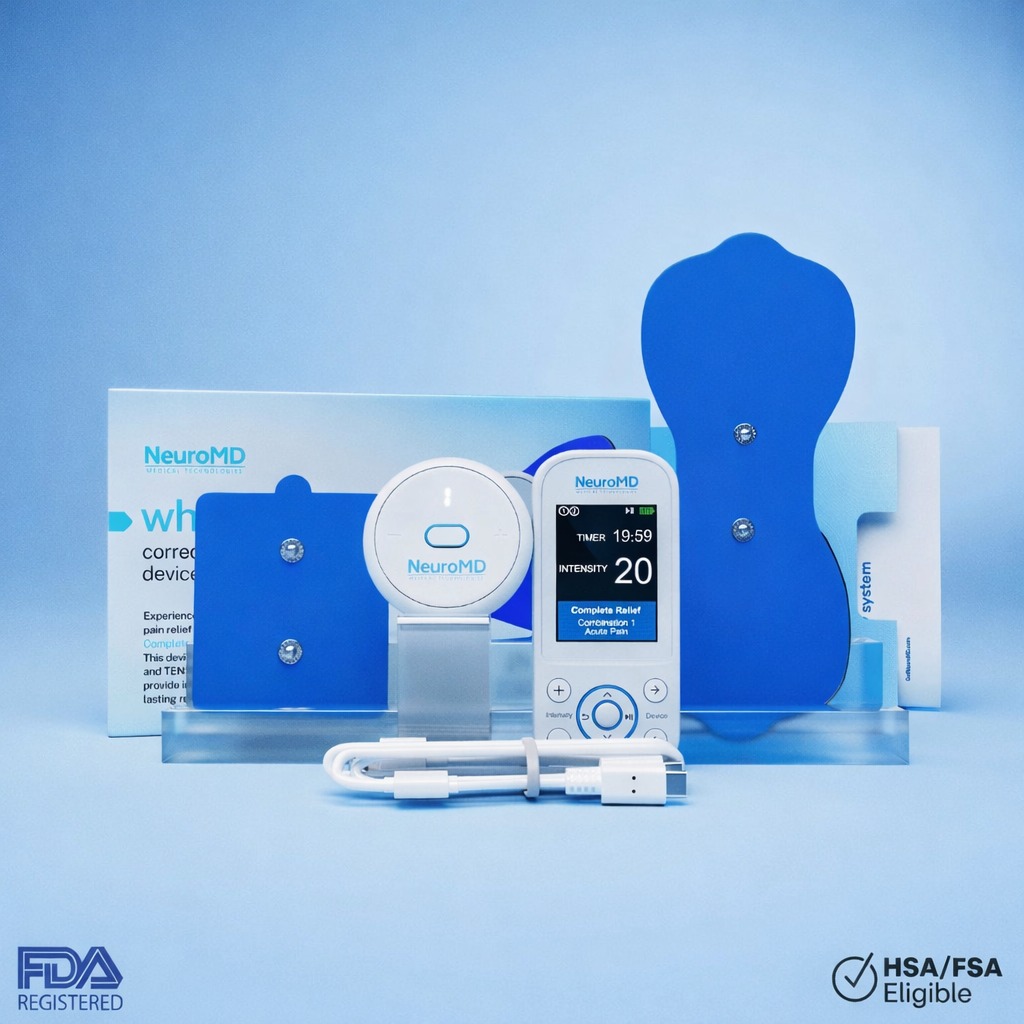
The newer approach uses NMES (neuromuscular electrical stimulation).
Here’s what the current device looks like:
The difference
TENS is generally used to calm pain signaling. NMES is designed to trigger controlled muscle contractions.
In other words, TENS often targets short-term comfort, while NMES aims to support the stabilizing muscles that help reduce repeat flare-up patterns.
The idea is to:
- Encourage engagement of stabilizing muscles
- Support improved muscle function
- Reduce compensation patterns over time
Some at-home devices now incorporate this technology into wearable formats designed for lower back use.
Sessions are typically around 25 minutes. Settings are adjustable. Intensity can be customized.
For many, consistency seems to matter more than intensity.
NeuroMD vs Common Alternatives
Muscle activation techniques are increasingly discussed in clinical and rehabilitation settings.
For readers comparing options, here is a simple side-by-side view of commonly discussed features.
One Retired Firefighter’s Experience

I’m Tom Atkins, 62, and my back pain felt constant but unpredictable.
It wasn’t always severe, but it was always there.
Mornings were the hardest for me.
I tried stretching programs, occasional therapy visits, and different devices over the years. Nothing seemed to address the underlying cycle.
After learning about muscle activation techniques, I decided to try a short daily routine at home.
The first few days felt unusual — a pulsing sensation in my lower back. Not painful. Just different.
After about a week, my mornings felt slightly less stiff.
By week three, I was moving more comfortably when getting out of bed.
It didn’t fix everything overnight, but it changed the pattern.
That’s what stood out to me.
Within the first few weeks of my second month, I noticed a huge difference in my back pain. I gained control over my back pain instead of letting it dictate how my day would go.
Affordable for Daily Use
For many people, the cost is around the price of one doctor visit, but it supports consistent whole-body corrective therapy at home.
Don’t judge it by size. The value comes from using it regularly and targeting the underlying muscle-support pattern.

Is It Safe?
Most users begin at the lowest setting and increase gradually based on comfort.
As with any device that stimulates muscles, certain individuals should consult a healthcare professional before use — especially those with pacemakers or implanted medical devices.
Most users describe the sensation as rhythmic muscle contractions rather than sharp discomfort.
It’s not intended to replace medical care.
And it may not be appropriate for every type of back condition.
But for recurring, muscle-related discomfort, some people report meaningful improvement with consistent use.
Due to increased interest in muscle activation approaches, availability and promotional pricing may vary by batch.
If you’re curious whether this type of method may fit your situation, you can check current availability and details below.
What Readers Report
• “Week two is when I noticed the biggest shift.”
• “It feels like muscle engagement, not shocks.”
• “Mornings aren’t as stiff anymore.”
What surprised many users wasn’t instant relief — it was how the pattern gradually changed.
Final Verdict
Back pain that keeps returning can feel discouraging — not just because it hurts, but because it changes how you move through your day.
Many people end up doing the same cycle without realizing it: you feel discomfort, you tighten up, you move less, and the muscles that are supposed to support the lower back gradually do less of the work. Over time, that pattern can become the default.
That’s why some people are now exploring approaches that focus less on “masking pain” and more on supporting muscle engagement — especially for recurring stiffness and tension that keeps coming back.
This isn’t meant to be a replacement for medical care, and it won’t be the right fit for every type of back issue. But for many readers, the appeal is simple: it’s designed as a short, consistent at-home routine (about 25 minutes) that you can do on your schedule.
What surprised many users wasn’t instant relief — it was how the pattern gradually changed with consistency. Mornings felt less stiff. Movement felt smoother. Flare-ups felt less frequent.
If you’re curious whether this type of muscle-activation routine may fit your situation, you can review today’s availability and current details below.
Availability and promotional pricing may vary by batch.
And it’s backed by a 60-day return policy: try it at home for up to 60 days. If you don’t love it, return it. Keep it only if it works for you.
What matters most isn’t intensity — it’s consistency.
Learn More About The At-Home Routine Readers Are Trying
After exploring the muscle activation approach explained above, many readers wanted to see how the device is designed and whether it may fit their situation.
Below you can review the device details, how the 25-minute routine works, and current availability.
Next Step: See If This 25-Minute Routine Fits Your Situation
If you’re curious whether a 25-minute daily muscle-activation routine may fit your situation, you can check the current details below.
We reached out to NeuroMD, and they kindly provided an exclusive limited-time coupon for our readers: 62% off, automatically applied when you click our link below.
- Designed for a short daily routine (about 25 minutes)
- Used at home on your schedule
- 60-day return policy — keep it only if it works for you

Comments
Join the discussion. You can post comments or replies using your name and email.
Has anyone tried this yet?
This is the one thing I have used that helped with shoulder and upper back pain. The relief is incredible.
I bought one for my dad first and now my mom uses it too. Totally worth it.
How long does shipping take?
For me it arrived in about 9 days and setup was easy.
Bought this for my wife with severe shoulder pain and she started feeling better after a few days. She is sleeping much better now too.
This helped us avoid constant appointments and gave my mom relief at home.
Wow. I just ordered this for my mom too. Thank you for sharing.
Have you bought one? How long did shipping take for you?
For us it was 7 working days.
We gave this to my mom and after three weeks she felt real progress. Her shoulder pain used to wake her every night.
Now this sounds amazing. Has anyone had side effects?
No side effects for us. My husband used the low setting first and increased gradually over a week.
I just ordered mine. I cannot wait.
I really want to test this out. My shoulders have been bothering me lately.
Does everyone know how long shipping takes? I want to surprise my dad with one.
In my case it arrived in around a week.
Your dad will love it. This could be the perfect gift for anyone with shoulder and back tension.
Absolutely. I bought one for my father and one for myself during a sale. It was a great discount and both have helped.
I need one badly. My neck and shoulders get tight after work and this looks promising.
I love it. It is not heavy and does not burn the skin. It feels like deep muscle engagement.
Got mine during a restock and ordered two at the promo price so I would not miss out.